The Jurisdiction of the Supreme Court of India: Key Constitutional Provisions (Articles 131–147)
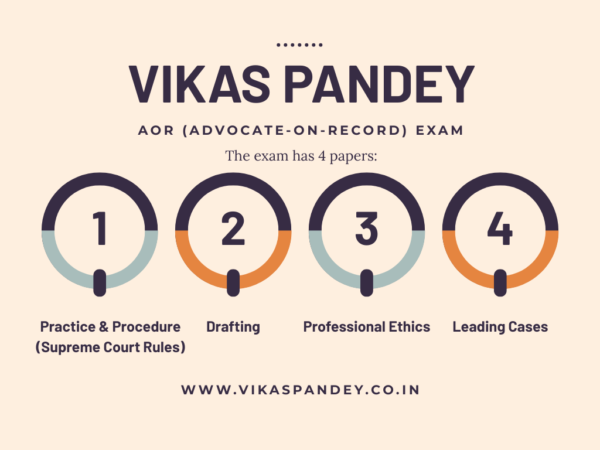
The Supreme Court of India is the apex judicial institution under the Constitution. Its jurisdiction—original, appellate, and advisory—is exhaustively provided in Part V, Chapter IV (Articles 124–147). For the Advocate-on-Record (AOR) examination, mastery over Articles 32, 131, 136, 137, 138, 139, 141, 142, 143, 145, and the cluster 131–147 is indispensable.
These provisions not only define the Court’s powers but also embody the philosophy of constitutional supremacy, judicial review, and the right to constitutional remedies.
This article systematically explains the relevant articles with their textual essence, scope, and examination-oriented points. Omitted articles (32A, 131A, 144A) are noted wherever relevant.
1. Right to Constitutional Remedies – Article 32
Article 32 guarantees the right to move the Supreme Court for the enforcement of fundamental rights (Part III). It is itself a fundamental right and has been described by Dr. B.R. Ambedkar as “the heart and soul of the Constitution.”
- The Supreme Court can issue directions, orders, or writs (habeas corpus, mandamus, prohibition, quo warranto, certiorari).
- Article 32 is wider than Article 226 (High Court writ jurisdiction) because it is a guaranteed fundamental right.
- Scope of judicial review under Article 32 is plenary; the Court can examine the constitutional validity of laws and executive actions infringing fundamental rights.
- Important note: Article 32A (consideration of constitutional validity of State laws in Article 32 proceedings) was omitted by the 43rd Amendment.
2. Original Jurisdiction – Article 131
Article 131 confers exclusive original jurisdiction on the Supreme Court in: (a) Disputes between the Government of India and one or more States; (b) Disputes between the Government of India and any State(s) on one side and one or more other States on the other; (c) Disputes between two or more States.
- The dispute must involve a question of law or fact on which the existence or extent of a legal right depends.
- Pre-1976 Article 131A (exclusive jurisdiction on constitutional validity of Central laws) was omitted.
- Suits under Article 131 are filed directly in the Supreme Court; no appeal lies as a matter of right from High Courts in such matters.
3. Appellate Jurisdiction (Articles 132–136, 139A)
The Constitution provides three streams of appellate jurisdiction:
- Article 132: Appeals from High Court judgments involving a substantial question of law as to the interpretation of the Constitution (civil, criminal or other proceedings). Certificate of fitness under Article 134A is required.
- Article 133: Civil appeals from High Court judgments if the High Court certifies that the case involves a substantial question of law of general importance.
- Article 134: Criminal appeals in cases of a death sentence or where the High Court reverses an acquittal and awards a death sentence.
- Article 136: Special Leave Petition (SLP) – the most powerful appellate weapon. The Supreme Court may, in its discretion, grant special leave to appeal from any judgment, decree, determination, sentence, or order passed by any court or tribunal in India. No certificate is required. This is the widest appellate jurisdiction.
- Article 139A: Transfer of cases from High Courts to the Supreme Court or between High Courts when a question of law of general importance arises or for expeditious disposal.
4. Review Jurisdiction – Article 137
Article 137 empowers the Supreme Court to review any judgment or order passed by it, subject to any law made by Parliament or rules made under Article 145.
- Review is not an appeal in disguise; it is maintainable only on limited grounds (error apparent on the face of the record).
- Curative petitions (evolved through judicial interpretation) are the final remedy after review is dismissed. They are filed to cure gross miscarriage of justice and are heard by the same bench that delivered the judgment, with a senior-most judge as per the 2002 ruling in Rupa Ashok Hurra. Though not expressly in the Constitution, curative jurisdiction flows from the Court’s inherent powers under Articles 137 and 142.
5. Ancillary and Enlarged Powers
- Article 138: Enlargement of jurisdiction of the Supreme Court by special agreement between the Government of India and State(s) or by Parliamentary law.
- Article 139: Parliament may by law confer on the Supreme Court power to issue writs, directions or orders for any purpose other than the enforcement of fundamental rights (supplementary to Article 32).
- Article 140: Ancillary powers necessary for exercising the Court’s jurisdiction.
- Article 142: Enforcement of decrees and orders of the Supreme Court and orders as to discovery, etc. This is the most potent provision enabling the Court to pass any decree or order necessary for “doing complete justice” in any cause or matter pending before it. It is a source of inherent, extraordinary powers (e.g., guidelines in Vishaka, Common Cause, etc.).
6. Advisory Jurisdiction – Article 143
Article 143 empowers the President to refer any question of law or fact of public importance for the opinion of the Supreme Court.
- The opinion is advisory; not binding.
- Two types: (i) Reference on any question (discretionary for the Court to answer); (ii) Reference on pre-constitutional treaties, etc. (mandatory).
- Landmark references include Berubari Opinion, Kesavananda Bharati (basic structure), Ayodhya (post-judgment reference), etc.
7. Binding Nature of Supreme Court Judgments – Article 141
The law declared by the Supreme Court is binding on all courts within the territory of India.
- “Law declared” includes ratio decidendi, not obiter dicta.
- Article 141 ensures uniformity in the interpretation of the law across the country.
8. Rules, Officers and Interpretation – Articles 145–147
- Article 145: Supreme Court makes rules for regulating its practice and procedure (subject to Presidential approval).
- Article 146: Officers and servants of the Supreme Court; expenses charged on the Consolidated Fund of India.
- Article 147: Interpretation clause – “law” includes any Ordinance, order, bye-law, rule, regulation, etc.
9. Judicial Review and Writ Jurisdiction
Articles 32 and 136 together form the bedrock of judicial review. The Supreme Court can strike down laws or actions violating fundamental rights (Article 32) or any constitutional provision (through the appellate route). The scope is expansive post-Kesavananda Bharati (basic structure doctrine) and Minerva Mills.
FAQ for AOR Examination
Q1. Why is Article 32 called the “heart and soul” of the Constitution?
It is a guaranteed fundamental right enabling direct access to the Supreme Court for the enforcement of Part III rights. Without it, fundamental rights would be rendered meaningless.
Q2. Distinguish between Article 131 (original) and Article 136 (appellate) jurisdiction.
Article 131 is the exclusive original jurisdiction in Centre-State or inter-State disputes. Article 136 is discretionary appellate jurisdiction by special leave from any judgment of any court/tribunal – widest in scope.
Q3. Can the Supreme Court entertain a petition directly under Article 32 for violation of a statutory right?
No. Article 32 is confined to the enforcement of fundamental rights only. For statutory or other legal rights, Article 226 (High Court) or Article 136 route is used.
Q4. What are the grounds for review under Article 137? Can a review be converted into an appeal?
Review lies only on an error apparent on the face of the record. It cannot be used as an appeal in disguise.
Q5. Explain the curative petition in one sentence for the exam.
A curative petition is an extraordinary remedy, evolved under Articles 137 and 142, to prevent a gross miscarriage of justice after the dismissal of a review petition, heard in-chamber by the same bench.
Q6. Is the opinion given under Article 143 binding on the President or Government?
No. It is purely advisory. However, in practice, the Government generally respects the opinion.
Q7. What is the significance of Article 142? Give one landmark example.
Article 142 empowers the Supreme Court to pass any order necessary for “doing complete justice.” Landmark example: Union Carbide Corp. v. Union of India (Bhopal Gas settlement) and Vishaka v. State of Rajasthan (sexual harassment guidelines).
Q8. Does Article 141 bind the Supreme Court itself?
Larger benches can overrule earlier decisions. However, smaller benches are bound by larger bench judgments.
Q9. What is the difference between Article 136 SLP and regular civil/criminal appeals?
SLP under Article 136 does not require a certificate of fitness from the High Court; it is a matter of discretion of the Supreme Court. Regular appeals (132–134) require a certificate under Article 134A.
Q10. Why are Articles 138, 139, and 140 important for AOR drafting?
They deal with enlargement, conferment of writ powers, and ancillary powers. In petitions, advocates often invoke these to seek appropriate reliefs when strict Article 32 or 136 does not cover the exact prayer.
Q11. Are Articles 145–147 procedural or substantive?
Primarily procedural and administrative, but Article 145 rules have binding force on practice before the Supreme Court and are frequently tested in AOR papers.
Q12. In one line each, state the purpose of omitted Articles 32A, 131A, and 144A.
All three were inserted during the emergency and later omitted to restore the Supreme Court’s full judicial review power.
Always read the bare Act first, then leading cases (Kesavananda Bharati, Maneka Gandhi, Rupa Ashok Hurra, Common Cause).”
This is one of the most effective study strategies for the Advocate-on-Record (AOR) examination, especially for constitutional law and Supreme Court jurisdiction topics.
Why Read the Bare Act (Constitutional Provisions) First?
The bare Act means the exact text of the Constitution of India — the raw, unadorned words of Articles 32, 131, 136, 137, 141, 142, 143, 145, etc., without any commentary or case summaries.
Reasons to start here:
- It builds foundational clarity. You understand the precise language, scope, and limitations of each provision exactly as the framers drafted it.
- It prevents misinterpretation. Many candidates jump straight into judgments and end up confusing what the Constitution actually says with what the Court later interpreted or expanded.
- In the AOR exam (particularly in the written papers on constitutional law, practice & procedure, and drafting), examiners expect accurate recall and application of the bare text. Questions often test direct provisions like “Explain Article 142” or “Distinguish Article 136 from Article 134.”
- It helps you see the structure and interconnections between articles (e.g., how Article 32 links with Article 142, or Article 137 with Article 141).
- Bare Act reading is fast and repeatable — ideal for revision.
Practical tip: Read each relevant Article 3–4 times slowly. Note keywords (e.g., “in its discretion” in Article 136, “complete justice” in Article 142, “law declared” in Article 141). Then read the marginal note and the full text.
Why Read Leading Cases After the Bare Act?
Once you know the constitutional text, judgments show how the Supreme Court has interpreted, expanded, or applied those provisions in real life. Cases illustrate evolution, limitations, and practical working of the Articles.
Here is a brief, exam-oriented explanation of the four landmark cases mentioned:
Kesavananda Bharati v. State of Kerala (1973). This 13-judge bench case is the foundation of the basic structure doctrine.
It directly relates to the limits of parliamentary amending power (Article 368) and the Supreme Court’s power of judicial review.
The Court held that Parliament can amend any part of the Constitution, but not the basic structure (e.g., supremacy of the Constitution, judicial review, rule of law, separation of powers, fundamental rights, etc.).
Relevance for AOR: It establishes the Supreme Court as the ultimate guardian of the Constitution. Many questions on judicial review, Article 32, and Article 141 flow from this case. It shows how the Court protects core constitutional features even while allowing amendments.
Maneka Gandhi v. Union of India (1978). This landmark judgment dramatically expanded the scope of Article 21 (Right to Life and Personal Liberty).
It overruled the narrow view in A.K. Gopalan and held that the “procedure established by law” under Article 21 must be just, fair, and reasonable (introducing elements of due process).
It established the Golden Triangle — Articles 14, 19, and 21 are interlinked. Any law depriving personal liberty must satisfy all three.
Relevance for AOR: It transformed writ jurisdiction under Article 32 and Article 136. It broadened judicial review and is frequently cited when discussing the expansive nature of fundamental rights and the Supreme Court’s role in protecting individual liberty against arbitrary state action.
Rupa Ashok Hurra v. Ashok Hurra (2002). This case invented the curative petition — the last judicial remedy after a review petition under Article 137 is dismissed.
The Court held that to prevent gross miscarriage of justice, it can reconsider its own final judgment in exercise of inherent powers under Articles 137 and 142.
Grounds are narrow: violation of natural justice, bias of the judge, or abuse of process. The petition is heard by the same bench (if possible) plus a senior judge.
Relevance for AOR: It directly explains the review jurisdiction (Article 137) and the extraordinary use of Article 142. In the exam, you must know that curative petitions are not a second review or appeal — they are exceptional and rare.
Common Cause v. Union of India (2018). This case recognized passive euthanasia and living wills (advance medical directives) as part of the right to die with dignity under Article 21.
It extensively used Article 142 to issue detailed guidelines for implementing the right when legislation was absent.
The Court balanced individual autonomy and dignity with safeguards against misuse.
Relevance for AOR: It is a classic example of the Supreme Court’s power under Article 142 to do “complete justice” and fill legislative gaps. It also shows the continuing expansion of Article 21 (linking back to Maneka Gandhi).
Recommended Study Sequence (AOR-Specific)
- Read the bare text of the relevant Articles (32, 131–147 cluster) multiple times.
- Understand the plain meaning and structure.
- Read the leading cases mentioned above (focus on headnotes, ratio decidendi, and observations related to the Articles).
- Note how each case interprets or expands the bare provision.
- Finally, read smaller supporting cases and recent judgments that apply these principles.
This sequence ensures:
- You answer Bare Act-based questions accurately.
- You can discuss judicial evolution intelligently (examiners love this).
- You avoid the common mistake of quoting case law without knowing the exact constitutional provision it interprets.
One-line summary for revision: Bare Act gives you the Constitution’s words. Leading cases give you the Supreme Court’s wisdom on what those words truly mean in practice.
For AOR preparation, master this method for every topic — it will reflect in your drafting paper and viva as well. If you follow it, Articles like 32, 136, 141, and 142 will no longer feel like isolated provisions but as a living, interconnected constitutional framework.