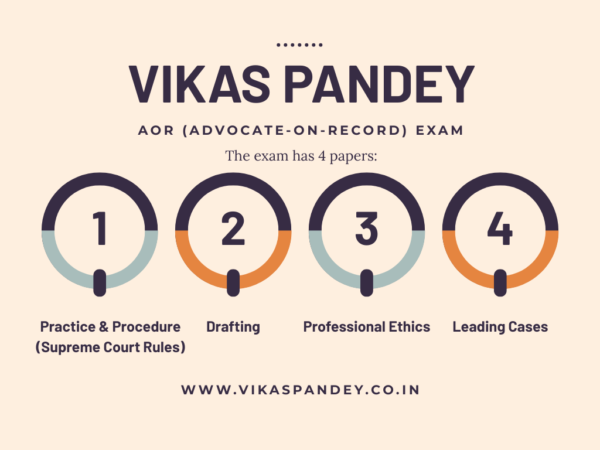
aAOR Examination Series · Constitutional Law
The Supreme Court of India: Jurisdiction, Powers & Constitutional Provisions
Articles 32 and 131 to 147 of the Constitution of India together constitute the architectural framework of the Supreme Court’s power. For an Advocate-on-Record, mastery of these provisions — their scope, limitations, and judicial interpretation — is not merely academic but the very foundation of practice before the highest court of the land.*
Part I · Article 32 – The Heart of the Constitution
Dr. B.R. Ambedkar famously called Article 32 the “heart and soul” of the Constitution. It is the provision that gives life to the Fundamental Rights guaranteed in Part III — for without a remedy, a right remains a pious wish. Article 32 empowers every person to move the Supreme Court directly for enforcement of Fundamental Rights, and the Supreme Court’s obligation to entertain such petitions is itself a Fundamental Right that cannot be suspended (except under Article 359 during a national emergency).
Article 32(1) & (2): Clause (1) guarantees the right to move the Supreme Court; Clause (2) empowers the Court to issue directions, orders, or writs — including habeas corpus, mandamus, prohibition, quo warranto, and certiorari — for enforcement of Fundamental Rights.
Article 32(3): Parliament may by law empower any other court to exercise, within its local limits, the powers conferred by Clause (2) — enabling the extension of writ jurisdiction beyond the Supreme Court.
Article 32(4): The right guaranteed under Article 32 shall not be suspended except as otherwise provided by the Constitution — a reference to the emergency provisions under Article 359.
The Five Writs under Article 32
| Writ | Meaning | Purpose |
|---|---|---|
| Habeas Corpus | “To have the body” | Challenges unlawful detention |
| Mandamus | “We command” | Directs performance of a public duty |
| Prohibition | “To prohibit” | Stops inferior courts from exceeding jurisdiction |
| Certiorari | “To be informed” | Quashes illegal orders |
| Quo Warranto | “By what authority” | Questions legality of holding a public office |
AOR Exam Focus: Article 32 creates a discretionary but not escapable remedy — the Supreme Court cannot refuse to entertain a petition but has wide discretion in granting relief.
Distinguish this from Article 226, which is broader (extends to any legal right, not only Fundamental Rights) but falls within High Court jurisdiction. The interplay of Articles 32 and 226, and the question of res judicata between proceedings under both, is a recurring examination theme.
Article 33: Parliament may, by law, restrict or abrogate Fundamental Rights in their application to the Armed Forces, paramilitary forces, police, and similar services, in the interest of proper discharge of duties and maintenance of discipline.
Article 34: Parliament may indemnify any person in respect of acts done during martial law in any area, and may validate sentences passed, punishment inflicted, or other acts done under martial law.
Article 35: Ensures that the legislative power to make laws in respect of matters in Articles 16(3), 32(3), 33, and 34 vests exclusively in Parliament, not the State Legislatures — maintaining uniformity of Fundamental Rights across India.
Part II · Original Jurisdiction of the Supreme Court
The original jurisdiction of the Supreme Court — its power to hear a dispute at first instance, without any prior adjudication — is set out in Article 131. This is a jurisdiction of constitutional stature, reserved for disputes of the highest political and federal importance.
Article 131 – Original Jurisdiction: The Supreme Court has exclusive original jurisdiction in any dispute between: (a) the Government of India and one or more States; (b) the Government of India and any State or States on one side and one or more other States on the other; or (c) two or more States. The dispute must involve a question of law or fact on which the existence or extent of a legal right depends. Purely political disputes, non-justiciable questions, or disputes involving private parties do not attract Article 131.
“Article 131 confers upon the Supreme Court a jurisdiction unique in constitutional design — it is not merely the apex court of appeal but the sole forum for disputes between federal units and the Union, functioning akin to an international arbitral tribunal.”
— Observation in State of Rajasthan v. Union of India (1977) 3 SCC 592
- Omitted Articles: Articles 131A (exclusive jurisdiction on constitutional validity of Central laws) and 144A have been omitted by constitutional amendments, streamlining the Court’s jurisdictional map.
- Exclusivity: The jurisdiction under Article 131 is exclusive — no other court can entertain such a federal dispute.
- Legal right required: A mere political grievance or policy dispute does not suffice; there must be a legal right in question.
- States and Union only: Private parties cannot invoke Article 131, even if they are the real parties in interest.
Part III · Appellate Jurisdiction
The appellate jurisdiction of the Supreme Court is exercised under Articles 132 to 135 and constitutes the largest volume of its business. It encompasses constitutional, civil, and criminal matters, with varying thresholds for invoking each stream.
Article 132 — Constitutional Appeals: An appeal lies to the Supreme Court from any judgment, decree, or final order of a High Court (whether in civil, criminal, or other proceedings) if the High Court certifies under Article 134A that the case involves a substantial question of law as to the interpretation of the Constitution.
Article 133 — Civil Appeals: Civil appeals from High Court judgments lie if the High Court certifies: (a) that the case involves a substantial question of law of general importance, and (b) that in its opinion the question needs to be decided by the Supreme Court. Post the Constitution (Thirtieth Amendment) Act, 1972, the earlier monetary thresholds were abolished, making the certificate the sole gateway.
Article 134 — Criminal Appeals: The Supreme Court’s criminal appellate jurisdiction is automatic in three situations without any certificate: (i) the High Court reversed an acquittal and sentenced the accused to death; (ii) the High Court has withdrawn a case from a subordinate court and convicted the accused and sentenced to death; (iii) the High Court certifies the case as fit for appeal.
Article 134A – Certificate for Appeal: Inserted to bring uniformity — requires any party intending to appeal to apply to the High Court orally at the time of pronouncement or within sixty days, after which the High Court decides whether to grant a certificate under Articles 132 or 133.
Article 135 – Federal Court Jurisdiction: Any jurisdiction or power exercisable by the Federal Court under existing law immediately before the commencement of the Constitution shall be exercisable by the Supreme Court — a transitional provision of enduring relevance for certain pre-constitutional statutes.
Part IV · Special Leave to Appeal — Article 136
Article 136 is perhaps the most potent and widely-invoked provision in the Supreme Court’s jurisdictional arsenal. It is a residuary and discretionary jurisdiction — a plenary power to grant special leave to appeal from any judgment, decree, determination, sentence, or order passed by any court or tribunal in India (excepting courts martial).
Scope and Limits of Article 136
The power under Article 136 is not a right of appeal but a special discretion of the Supreme Court. It may be exercised even where no other appellate jurisdiction exists. However, the Court has consistently held that it will not interfere with concurrent findings of fact by courts below unless there is a perverse finding, legal error, or miscarriage of justice.
- Any court or tribunal: Includes High Courts, Tribunals (CAT, NGT, TDSAT, etc.), and even quasi-judicial bodies — but not courts martial under the Army Act.
- Any judgment: The breadth of “judgment, decree, determination, sentence, or order” covers interlocutory orders too, though the Court exercises restraint.
- Discretionary nature: Grant of leave is never a matter of right; the Court evaluates whether a substantial question of law arises or grave injustice is apparent.
- SLP to Appeal conversion: Once leave is granted, the SLP converts into a full-fledged civil or criminal appeal.
Part V · Review, Curative Petitions — Article 137
The Supreme Court is not infallible, and Article 137 acknowledges this by empowering it to review its own judgments and orders. Subject to the provisions of any law made by Parliament and the rules made under Article 145, the Supreme Court has power to review any judgment pronounced or order made by it.
Grounds for Review
- Error apparent on the face of the record — a patent, glaring error not requiring elaborate argument.
- Discovery of new and important matter or evidence not within the knowledge of the petitioner and not producible after due diligence.
- Any other sufficient reason — interpreted restrictively.
Review petitions are ordinarily heard by the same Bench that delivered the original judgment, and in criminal matters by circulation (i.e., without oral hearing) unless otherwise ordered.
Curative Petitions
The curative petition is a judge-made remedy evolved in Rupa Ashok Hurra v. Ashok Hurra (2002) 4 SCC 388 to prevent abuse of process and cure a gross miscarriage of justice even after dismissal of a review petition. The grounds are narrow:
- Violation of the principles of natural justice — e.g., the judge was biased or a party was not heard.
- The judgment violated the doctrine of stare decisis so fundamentally as to cause grave injustice.
A curative petition must be first circulated to a Bench of three senior-most Judges and the Judges who delivered the impugned judgment. It is admitted only if a majority conclude that the matter needs hearing.
Critical AOR Examination Point
Distinguish between:
- Appeal under Articles 132–134 — a right conferred by the Constitution
- Special Leave under Article 136 — purely discretionary
- Review under Article 137 — limited to errors apparent or new evidence
- Curative Petition — judge-made, last resort, extremely narrow
The AOR exam frequently tests the procedural distinctions and limitation periods applicable to each.
Part VI · Enlarged and Ancillary Jurisdiction
Article 138 – Enlargement of Jurisdiction: The Supreme Court shall have such further jurisdiction as Parliament may by law confer with the consent of the Government of India and the State Government concerned, for disputes between States.
Article 139 – Writ Powers: Parliament may by law confer on the Supreme Court power to issue directions, orders, or writs for purposes other than enforcement of Fundamental Rights — enabling the Court to exercise writ powers beyond the Article 32 domain.
Article 139A – Transfer of Cases: The Supreme Court may, on application or suo motu, transfer any case, appeal, or other proceedings pending before one High Court to another, or transfer and try any case itself if it involves the same or substantially the same question of law pending before two or more High Courts.
Article 140 – Ancillary Powers: Parliament may by law make provision for conferring such supplemental powers on the Supreme Court as may appear necessary or desirable for enabling it to exercise its jurisdiction more effectively.
Part VII · Law of the Land — Articles 141 & 142
Article 141 — Binding Precedent: The law declared by the Supreme Court is binding on all courts within the territory of India. This is the constitutional foundation of the doctrine of stare decisis in the Indian legal system.
“The ratio decidendi — the legal reason underpinning a Supreme Court judgment — is what binds. Obiter dicta, though persuasive, do not carry the force of Article 141.”
— Bengal Immunity Co. Ltd. v. State of Bihar AIR 1955 SC 661
- Ratio vs. Obiter: Only the ratio decidendi binds under Article 141; obiter dicta are merely persuasive.
- Per incuriam decisions: A decision rendered without consideration of a relevant statutory provision or binding precedent is per incuriam and not binding.
- Larger Bench rule: A larger Bench can overrule a decision of a smaller Bench; a co-ordinate Bench should refer conflicting views to a larger Bench.
Article 142 — Complete Justice: The Supreme Court, in the exercise of its jurisdiction, may pass such decree or make such order as is necessary for doing complete justice in any cause or matter pending before it, and any such decree or order shall be enforceable throughout India.
Article 142 is a unique constitutional provision that transcends the ordinary limitations of jurisdiction. The Supreme Court has invoked it to grant relief that no statute explicitly provides for — including dissolving marriages, winding up companies in the public interest, and issuing structural orders in Public Interest Litigation. However, Article 142 cannot be used to override a specific statutory prohibition — it supplements but does not supplant the law.
Part VIII · Advisory Jurisdiction — Article 143
Article 143 confers upon the President of India the power to refer to the Supreme Court any question of law or fact of such public importance that it is expedient to obtain the Supreme Court’s opinion on it. This is the advisory jurisdiction — an opinion, not a judgment.
| Provision | Language | Effect |
|---|---|---|
| Article 143(1) | “May refer” | Court may advise; opinion not binding |
| Article 143(2) | “Shall refer” | Disputes under pre-constitutional treaties; opinion binding |
- Opinion, not binding: The advisory opinion under Article 143(1) is not binding, though it carries great persuasive weight.
- Refusal to advise: The Court may decline to answer a reference if the question is purely political or hypothetical — as in Re: Special Reference No. 1 of 2012.
- Procedure: The reference is heard by a Constitution Bench of at least five judges.
Part IX · Other Vital Articles (144–147)
Article 144: All civil and judicial authorities in India shall act in aid of the Supreme Court. This provision ensures that the Court’s orders are not merely parchment rights but have the coercive backing of the entire state apparatus. Non-compliance may amount to contempt of court.
Article 145 – Rules of Court: Subject to the provisions of any law made by Parliament, the Supreme Court may, with the approval of the President, make rules for regulating generally the practice and procedure of the Court. The Supreme Court Rules, 2013 are framed under this power — directly relevant to AOR practice.
Article 146: The Chief Justice of India makes appointments of officers and servants of the Supreme Court. The administrative expenses of the Supreme Court are charged to the Consolidated Fund of India — insulating the Court’s finances from the annual appropriation process.
Article 147 – Interpretation: For the purposes of Articles 132 and 133, the expression “substantial question of law as to the interpretation of the Constitution” includes any substantial question of law as to the interpretation of the Government of India Act, 1935, or the Indian Independence Act, 1947 — preserving continuity with constitutional antecedents.
Part X · Writ Jurisdiction & Judicial Review — Scope and Limits
Judicial review — the power of courts to examine the constitutional validity of legislative enactments and executive actions — is part of the basic structure of the Constitution (Indira Nehru Gandhi v. Raj Narain, 1975; L. Chandra Kumar v. Union of India, 1997). The Supreme Court’s writ jurisdiction under Article 32 is the primary vehicle for this review.
Scope of Judicial Review
- Constitutional validity of legislation: Whether a law violates Fundamental Rights or exceeds legislative competence.
- Executive action: Whether administrative actions are arbitrary, mala fide, or violate principles of natural justice.
- Delegated legislation: Whether subordinate legislation is ultra vires the parent statute or Fundamental Rights.
- Proportionality review: Post Modern Dental College (2016), proportionality has been increasingly applied, especially in matters involving restrictions on Fundamental Rights.
Grounds for Challenging Administrative Action
| Ground | Meaning |
|---|---|
| Illegality | The decision-maker exceeded or misused the power conferred |
| Irrationality (Wednesbury) | The decision was so unreasonable that no reasonable authority could have made it |
| Procedural impropriety | Failure to observe procedural requirements including natural justice |
| Proportionality | The measure adopted was disproportionate to the legitimate aim pursued |
FAQ
1. Why is Article 32 considered the “heart and soul” of the Constitution?
Article 32 provides a guaranteed right to approach the Supreme Court for enforcement of Fundamental Rights. Without an effective remedy, rights would be meaningless. Hence, it forms the backbone of constitutional protection.
2. Is the Supreme Court bound to entertain a petition under Article 32?
Yes, the right to move the Supreme Court under Article 32 is itself a Fundamental Right. The Court cannot refuse to entertain such petitions, although it has discretion in granting relief.
3. What are the five writs under Article 32?
The Supreme Court may issue:
- Habeas Corpus
- Mandamus
- Prohibition
- Certiorari
- Quo Warranto
These are tools for enforcement of Fundamental Rights.
4. What is the key difference between Article 32 and Article 226?
- Article 32: Limited to enforcement of Fundamental Rights (Supreme Court)
- Article 226: Broader scope (includes legal rights) and exercised by High Courts
5. When can Fundamental Rights be restricted under Articles 33 and 34?
- Article 33: For armed forces and similar services
- Article 34: During martial law
Both ensure discipline and state security.
6. What is the scope of Article 131 (Original Jurisdiction)?
It covers exclusive disputes between Union and States or among States, involving legal rights. Private parties cannot invoke this jurisdiction.
7. Can purely political disputes be entertained under Article 131?
No. The dispute must involve a justiciable legal right, not merely political disagreements.
8. What is meant by appellate jurisdiction under Articles 132–134?
It refers to the Supreme Court’s power to hear appeals from High Courts in:
- Constitutional matters (Art. 132)
- Civil matters (Art. 133)
- Criminal matters (Art. 134)
9. What is a certificate under Article 134A?
It is a certification by the High Court that a case is fit for appeal to the Supreme Court, required in many appellate cases.
10. What is Article 136 (Special Leave Petition)?
Article 136 grants the Supreme Court discretionary power to allow appeal from any court or tribunal (except court martial). It is not a right but an extraordinary remedy.
11. Is Special Leave Petition (SLP) a matter of right?
No. It is purely discretionary, and the Court interferes only in cases of grave injustice or substantial legal issues.
12. What happens after leave is granted under Article 136?
The SLP is converted into a regular appeal, and the case is heard on merits.
13. What is the difference between appeal and SLP?
- Appeal (Arts. 132–134): A constitutional/statutory right
- SLP (Art. 136): Discretionary power of the Court
14. What is the scope of review under Article 137?
The Supreme Court may review its judgment on:
- Error apparent on record
- Discovery of new evidence
- Other sufficient reasons
15. What is a curative petition?
A judge-made remedy (Rupa Ashok Hurra case) filed after dismissal of review petition to prevent gross miscarriage of justice.
16. How is a curative petition different from a review petition?
- Review: Constitutional remedy under Article 137
- Curative: Extra-constitutional, extremely limited, last resort
17. What is Article 139A (Transfer of Cases)?
It empowers the Supreme Court to transfer cases between High Courts or to itself to avoid conflicting judgments on similar legal issues.
18. What is the importance of Article 141?
The law declared by the Supreme Court is binding on all courts in India, forming the basis of the doctrine of precedent.
19. What is the difference between ratio decidendi and obiter dicta?
- Ratio decidendi: Binding legal principle
- Obiter dicta: Persuasive but not binding
20. What is Article 142 (“Complete Justice”)?
It allows the Supreme Court to pass any order necessary to do complete justice, even beyond statutory limitations, but not contrary to law.
21. What is advisory jurisdiction under Article 143?
The President of India may seek the Supreme Court’s opinion on important legal questions. Such opinions are generally not binding.
22. Can the Supreme Court refuse to answer a Presidential reference?
Yes, especially if the question is hypothetical or political in nature.
23. What is the significance of Article 144?
All authorities in India must act in aid of the Supreme Court, ensuring enforcement of its orders.
24. Why is Article 145 important for AOR aspirants?
It empowers the Court to frame Supreme Court Rules, 2013, which govern procedure—essential for AOR practice.
25. What is judicial review and its constitutional basis?
Judicial review is the power to examine the validity of laws and executive actions. It flows primarily from Article 32 and is part of the basic structure of the Constitution.
26. What are the grounds for judicial review of administrative action?
- Illegality
- Irrationality (Wednesbury principle)
- Procedural impropriety
- Proportionality
27. Which Articles have been omitted and are important for exams?
- Article 32A
- Article 131A
- Article 144A
These reflect constitutional evolution and are frequently asked in exams.
28. What is the key distinction between different jurisdictions of the Supreme Court?
- Original: Article 131
- Appellate: Articles 132–135
- Special Leave: Article 136
- Review: Article 137
- Advisory: Article 143
29. Is Article 142 unlimited in scope?
No. While broad, it cannot override express statutory provisions and must operate within constitutional boundaries.
30. Why are Articles 32 and 131–147 crucial for AOR Examination?
They define the entire functional framework of the Supreme Court, making them one of the most frequently tested and practically relevant areas.
Final Examination Checklist — Articles 32 & 131–147
- ① Know which articles have been omitted (131A, 32A, 144A) and why.
- ② Distinguish original (Art. 131), appellate (Arts. 132–135), special leave (Art. 136), advisory (Art. 143), review (Art. 137), and curative petition jurisdictions.
- ③ Understand the interplay of Articles 32 and 226 — similarities and differences.
- ④ Article 141 binds “all courts” — learn the exceptions (per incuriam, larger bench).
- ⑤ Article 142 “complete justice” — learn its expansive use and limits.
- ⑥ Article 143 — advisory opinion is non-binding under 143(1) but binding under 143(2).
- ⑦ Supreme Court Rules, 2013 flow from Article 145 — essential AOR procedural knowledge.
This article is prepared for academic and examination purposes for the AOR (Advocate-on-Record) Examination conducted by the Supreme Court of India. The constitutional text is drawn from the Constitution of India as amended. Legal positions reflect settled judicial interpretation as of the date of publication. Candidates are advised to supplement this reading with original judgments and updated bare acts.
✧ Vikas Pandey · Advocate ✧ Supreme Court of India · Lawyer· AOR Examination Preparation